

Culturally responsive therapy makes room for your identity, relationships, and lived experiences.
Therapy but Make it Affirming, Inclusive, and Relational
Going through struggles and stressors during different periods of your life can be really tough. Therapy may not come to mind as a solution, especially if you have learned to try to take control by figuring things out yourself in order to find a way out of problems as they happen. Sometimes it can be hard to dig yourself out of pits of confusion, anxious thoughts, and loss of control. There is a feeling that no one will understand what you are experiencing, much less the barriers you face when it comes to cultural and familial expectations that can be hard to resolve. Much less a therapist.
And while a therapist cannot speak to every experience you have gone through personally, therapy creates a space where you can freely process what it has been like for you to hold everything together because of these contexts. You can finally exhale and speak to the possible emotional exhaustion. As a therapist in Torrance, CA, I approach the experiences of the adults I work with from a nonjudgmental perspective and with genuine curiosity. It begins with understanding the cultural, familial, or identity-related experiences they want to work through, including anxiety, guilt, or relationship expectations. The exhale comes from knowing they do not have to worry about someone judging them or seeing them differently because of what they share in the therapy room with me.
That is what makes therapy feel like a path toward peace for adults. Because it is less of a solution and more of a space to finally let go of the breath they have been holding.
Reflection: Have you ever wondered whether a therapist would understand the parts of your experience that are difficult to explain?
Key Takeaways
Culturally responsive therapy considers how culture, identity, systemic pressures, and relationships influence emotional well-being rather than viewing these experiences in isolation.
Somatic attachment therapy can help adults recognize emotional and nervous system responses, understand relationship patterns, and gradually build self-trust.
A culturally affirming therapeutic relationship creates space to explore family expectations, identity, and personal needs without pressure to have everything figured out.
What Does Culturally Responsive Therapy Actually Mean?
Culturally responsive therapy means cultural values are intertwined with how lived experiences are explored and how they impact the concerns and struggles adults come to speak to a therapist about. It considers the pressures that can come from within a cultural and societal context, and how different layers of expectations and unsaid rules influence anxiety, relationships, and the self-perception of adults.
Traditional therapeutic approaches can overlook cultural experiences by approaching them through a Eurocentric context and assuming everyone experiences pressures similarly.

Therapy can be a space where you begin to feel understood without having to explain away parts of yourself.
It goes beyond acknowledging someone’s identity and takes into consideration that culture, identity, mental health, and relationships all exist together and impact one another. None of them exist in isolation from each other.
One of the most vital things a therapist can do to help an adult reach their goals is to acknowledge the pivotal role that cultural and systemic pressures play in their emotional well-being and relationships with others and the world. These experiences should be brought forward and discussed throughout treatment rather than ignored.
Reflection: How would the therapy experience be for you if your culture, identity, relationships, and self-perception were all brought into the room with you?
When Family Expectations and Identity Shape How You Show Up
Working with First-Gen, BIPOC, and Queer adults throughout the past 9 years as a marriage and family therapist, my background has been deeply shaped by the understanding that adults are shaped by the systems and hidden rules around them. Culture and our respective families shape how we show up in our daily lives, beginning in childhood. They influence how we begin to relate to ourselves and others based on expectations of right and wrong. This is why it's important that these aspects are not neglected within the therapy room. To dismiss these parts would be a disservice to adults coming to therapy to address anxiety and stress.
As someone who specializes in guiding adults to find their voice again amidst cultural, systemic, and identity stressors, pressures, and expectations, I have come across those who naturally fall into patterns of not setting boundaries, letting fear of disappointment win, people-pleasing, and feeling responsible for the emotions of others. Most importantly, they may lose touch with their own needs in an effort to maintain relationships that, in hindsight, can feel one-sided. They may begin to question why others do not show up for them in the ways they need, especially when they have done so for others time after time. This creates an internal conflict between wanting to belong and stay connected with someone versus what it would mean for them to be independent.
As a result, many find themselves feeling tension around family, friends, or at work because of feeling caught between wanting to maintain connection and wanting to care for themselves in ways that feel less emotionally draining. Being everything for everyone becomes harder and less sustainable as you try to build a life of your own. This can lead to emotional burnout, feelings of irritability, avoidance of certain relationships, or wanting to cut them off completely.
It can feel easier to provide support than to ask for it, especially when past experiences of asking for support have left you feeling that others will not show up for you in the ways you need. Over time, these experiences can lead to assumptions that others will never show up for you, leaving you questioning what the point of asking for support even is.
But at what cost to yourself?
How Somatic Attachment Therapy Supports Anxiety and Relationships

Reconnecting with yourself can begin with having space to explore your needs without the pressure of meeting everyone else's expectations.
For adults who are used to staying busy and being productive, sometimes therapy can be difficult because it encourages you to really pay attention to your nervous system, patterns, and feelings. This is not always what we are taught to do as children, especially for some BIPOC adults whose parents may not have been taught emotional awareness themselves and therefore could not model it. As families navigate acculturation, these experiences can also differ from cultural expectations around shutting out emotions. It can be experienced differently in BIPOC families. That is where somatic attachment therapy can be helpful for adults looking for support around their anxiety and relationships.
It is gentle in its approach to meeting your emotions and body in new ways, where you begin to feel connected to them. Instead of avoiding feelings because you do not know what to do with them, you learn to recognize early signs and begin putting new practices in place, like grounding skills or acknowledgment practices, to help address emotions before they intensify. You learn to build a new language to help you cope with moments that can feel distressing and anxiety-provoking.
Anxiety can feel distressing in the moment, which leads many adults to stay busy and use distractions to help it go away. It helps in the moment as temporary relief, but the feelings or situations that bring you anxiety do not necessarily become easier to deal with. When we try to understand anxiety intellectually, it leaves out the impact it has on our bodies — the somatic responses of stomach pain, chest pain, headaches, tension in the body.
Paying attention to these responses can create opportunities for change because it allows you to have more choices in moments that lead to an “emotional shutdown”—when things feel too much and our defenses come up through overexplaining, getting upset, wanting to run away, or our minds going blank.
It can create a deeper understanding of how the roles of relationships in your life have impacted the way you long for connection or struggle with relationships. Along with acknowledging that struggles with relationships or feeling connected to others can come from factors that may not have been entirely within your control.
Healing begins in the therapy room, where I work collaboratively with adults in individual therapy to meet their nervous systems where they are. Together, we build trust as they learn to recognize when their defenses arise and gradually feel safe enough to respond differently. This can begin a path toward self-trust, knowing they will be okay even if connections or relationships go awry. The world will not fall apart.
Why Feeling Understood Matters in the Therapeutic Relationship
Feeling understood, especially if you have not felt that before, can create meaningful change for adults who struggle to be their true selves due to fear of judgment or criticism. There is something different about co-creating a relationship in therapy that is slowly built on trust and safety, allowing for long-lasting growth where what is learned in therapy can translate into relationships outside the therapy room.
I am there with you through the messiness, the uncomfortable moments, grief, sadness, and most importantly, the happy moments and wins. The therapy space becomes a place to explore uncertainty, fears, nuances, and options without feeling pressured to have an answer right away or move toward a decision that does not feel comfortable.
Adults describe their experience in therapy as one where they can finally exhale after holding their breath. And that comes from discussing topics related to cultural expectations, identity, or complicated relationships.
In my clinical approach, I firmly believe that discussing these themes is essential to supporting growth, anxiety relief, and healthier relationships. These experiences can be foundational to understanding what keeps us feeling stuck in patterns of how we feel or respond to others in our lives and to ourselves.
Therapy helps support self-understanding, allowing you to recognize that you may have more choices in how you move through life than you previously thought.
Finding a Culturally Affirming Therapist in Torrance, CA
Therapy and culture can coexist to help you find the internal balance you have been curious about. As a therapist in Torrance, CA, I work with adults navigating anxiety, relationship difficulties, identity stress, and family expectations. Having a culturally affirming therapist in California who provides LGBTQIA+-affirming care matters, not only to have someone hold a safe space for you as you explore themes that bring up discomfort, but also someone who understands the internal conflicts that arise when stepping away from cultural expectations.
It can also help you better understand your needs, explore boundaries, and build trust in yourself. Together, we explore your needs without feeling pressured to choose between family and yourself. We find a path toward relief from emotional exhaustion amidst fears of disappointment and guilt.
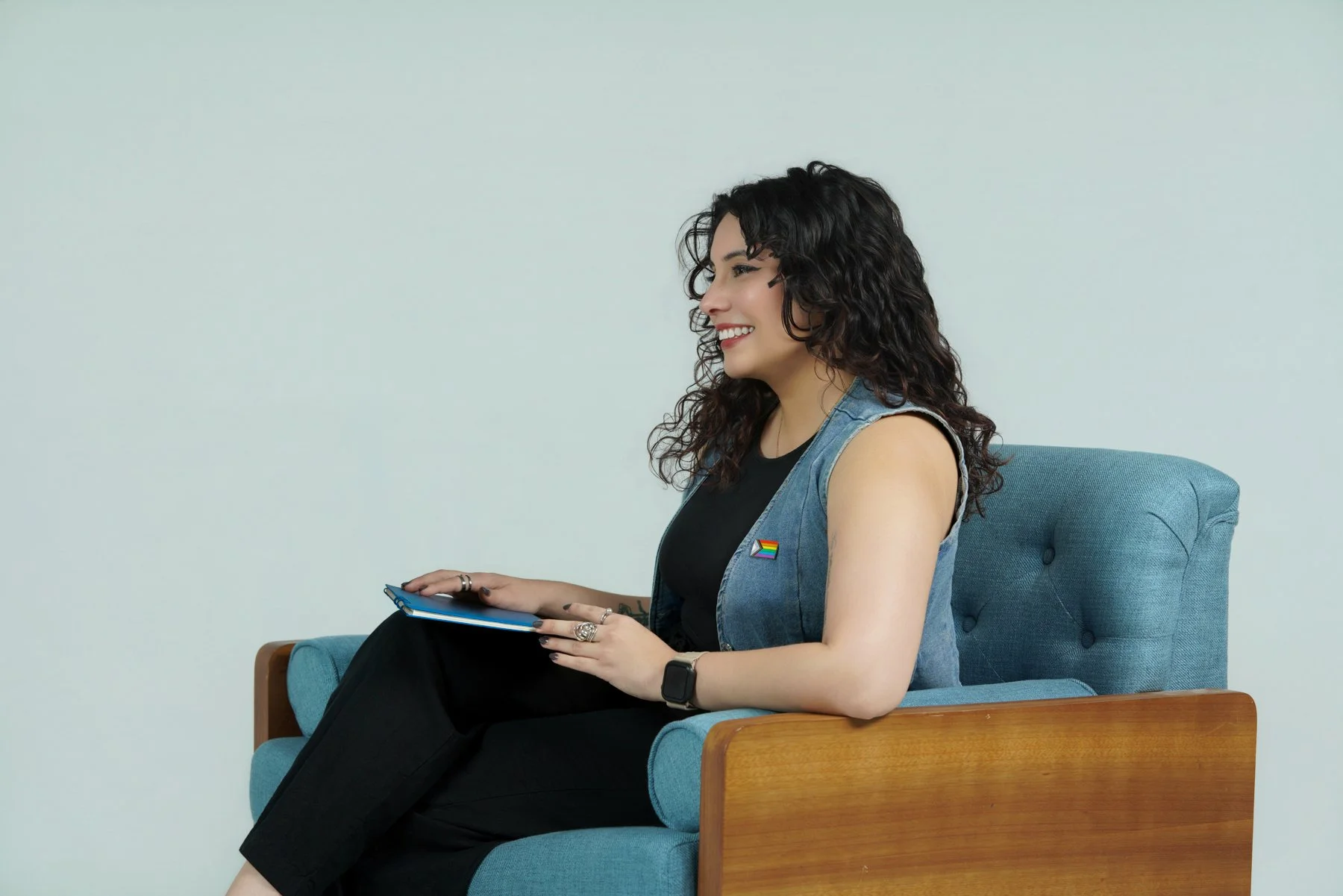
Ligia Orellana, MA, LMFT, provides culturally affirming individual therapy for adults navigating anxiety, relationship difficulties, and identity stress in Torrance, CA, and online throughout California.
If you have found that therapy has not worked for you in the past, that is not a flaw. Sometimes, the therapeutic relationship may not have been the right fit, or you may not have felt understood or culturally supported in the ways you needed.
Finding a therapist in Torrance, CA who understands your experiences can be an important part of exploring what support feels right for you
Curious about how therapy can support you? I'm now offering in-person therapy sessions in Torrance, CA. For those outside of Torrance, I offer online therapy throughout California. Therapy is offered in English and Spanish.
Therapy That Makes Room for All of You
Culturally responsive therapy that incorporates somatic attachment therapy might be the missing piece you have been looking for when searching for a therapist in Torrance, CA. It's a space where you can understand yourself through exploring patterns, needs, relationships, and expectations in a different way than you have before. You can begin letting go of the constant pressure to have everything figured out because, in therapy, you don't have to perform a role or meet other people's expectations. At least for that hour, to begin with.
A meaningful part of learning how to cope with circumstances that feel out of control is recognizing that there is a way through that does not have to leave you feeling stuck or in survival mode day by day.
Together, we move at a pace that allows you to reconnect with your own voice and build confidence in the choices you make going forward.
You don't have to figure it all out alone. Book your consultation below.

Ligia Orellana, LMFT (#122659)
I’m an anxiety therapist based in Torrance, California, certified in LGBTQ+ Affirmative Therapy and Somatic Attachment Therapy. I support first-generation BIPOC and Queer adults who feel the pressure to hold it all together in moving through people-pleasing and self-doubt, anxiety, relationship anxiety, and identity stress. My work creates space for deeper connection and self-trust through emotional safety and cultural understanding.
Learn about my work as a therapist in Torrance and through online therapy in California, or visit my About page.
