
Why Does Being Around Family Bring Back Old Feelings?
If this has been the year where you have been putting work into yourself — learning to set boundaries, communicate differently, or trust your decisions — let's take a moment to be with the progress you have made within yourself. The relationship you have cultivated with yourself is not something to be minimized.

Why do old relationship patterns resurface around family? Explore family roles, cultural expectations, and boundaries with a therapist in Torrance, CA.
So, when it comes to being around family for holidays or gatherings, there may be an automatic reaction of wanting to protect this progress and the relationship with yourself that you have worked hard to cultivate. Maybe you notice this in wanting to avoid these gatherings or certain people. Maybe you are wanting to understand what it is you are trying to avoid.
It makes sense.
Who we are in our everyday lives may differ from who we are around certain relatives, especially if we have created a life outside of those relationships. There is beauty in creating community outside of family that allows you to show up as your authentic self without judgment or criticism. And it is that part of yourself that may feel minimized or silenced when being around family.
Thinking back to your childhood can give you a bit of information about which relatives may have made you feel uncomfortable, upset, or irritable. Our bodies can remember these experiences, and old feelings may resurface as you prepare to see family again.
Reflection prompt: Have you ever noticed yourself responding differently around family than you would with friends, coworkers, or other people in your life?
Key Takeaways
Family gatherings can bring out old relationship patterns, even when you have worked hard to develop new ways of communicating, setting boundaries, and trusting yourself.
Unspoken family roles, cultural expectations, and protective nervous system responses can make it difficult to show up differently around family.
Healing can involve honoring your needs and redefining connection on your own terms without feeling responsible for how everyone else responds.
Why Family Gatherings Can Bring Out Old Relationship Patterns
As we develop into our own person, shaped by life experiences outside of family and learning more about ourselves, our families may or may not be doing the same. And that is sometimes where old behavioral patterns remain. There may be time or distance apart, but when everyone is back together, it can feel like no time has really gone by. This can feel comforting in some family dynamics. For others, it may be emotionally overwhelming to be held to old, unspoken expectations and roles tied to who they used to be — and perhaps the reason they wanted to create distance in the first place.
It is easy to fall back into old roles and expectations. These are built over years of early family experiences, where we learn unspoken rules and cultural expectations around how we should interact with one another. Knowing what to expect can bring comfort to those who struggle with change, which can maintain these old relationship patterns and make it difficult for new ones to emerge. So, for someone who has done the work of developing new relational patterns, it can be hard to navigate family dynamics where traditional cultural expectations may not align with these changes. This can also feel emotionally exhausting when you find yourself code-switching around family to navigate these expectations.
When we have this type of understanding of why old roles and expectations resurface around family, it can help us not only emotionally prepare for gatherings but also find ways to show up as a newer version of ourselves when family dynamics may still expect the old version.

Who we are in our everyday lives may differ from who we are around certain relatives, especially when old family roles and cultural expectations resurface.
When You Fall Back Into Familiar Family Roles
These family roles can remind you of what has perhaps kept you stuck in your own relationships outside of family, especially if you have been working through patterns of people-pleasing. You may be trying to outgrow them or already have. You may find yourself falling back into familiar roles, such as being the one who keeps the peace or takes responsibility for others' emotions. This can lead to feelings of discomfort when thinking about trying to take care of yourself and live in your truth, especially when it conflicts with wanting to belong and not rock the boat with family.
If you are someone who hardly ever causes trouble, you may feel an immense sense of pressure to not change things in the family. Especially if you already anticipate the negative feelings that may come from doing something different or have observed the outcome of other family members doing so.
It can be a form of protection — a way to avoid difficult feelings and discomfort, even if only for a short time. It may feel like the least you can do, especially when you are used to sacrificing your own comfort for the comfort of others. But does it feel tiring to do so?
The following are behaviors to pay attention to when those familiar family roles are pulling you back in. Being able to notice these behaviors can help you reflect after interactions with family members:
Struggling to say no.
Feeling guilty when you cannot take on what is being asked of you.
Being the mediator in the family.
Taking on extra tasks to make sure everything goes smoothly.
Staying silent when someone is making you feel uncomfortable.
Reflection prompt: What role do you notice yourself returning to when you're around family, even when it no longer feels comfortable?
How High-Conflict Family Dynamics Affect Communication
Falling back into old relationship patterns can be especially difficult for those navigating families that tend to sweep topics under the rug instead of addressing them. Responses may come from a place of defensiveness — dismissing feelings, being adamant about not wanting to understand, and using judgment or criticism as a form of communication.
This can make it hard to hold conversations with family members because it can almost feel like you are trying to find a way through a wall. Returning to old family dynamics can put those new communication skills to the test. It can be especially difficult not to be emotionally impacted by behaviors that you have recognized as triggering your nervous system.
During difficult conversations with family, you may find yourself gravitating toward the following responses as a means of protecting yourself:

Recognizing what our bodies are trying to communicate can help us understand how anxiety protects us through familiar relationship patterns.
Over-explaining.
Withdrawing.
Feeling the pressure to defend your decisions.
These responses can feel almost automatic, as they may have been a means of keeping parts of yourself safe. You may also be trying not to let old relationship dynamics pull you back into patterns that lead to second-guessing your worth, choices, and who you have become.
An important reminder is that these experiences do not have to mean you are taking a step backward. You can still practice effective communication skills even if another person does not respond differently. Acknowledging that you are not responsible for the behaviors of others may be the message you leave with.
What Happens in Your Nervous System During Family Conflict?
Anxiety is a feeling that can come up around family gatherings, and experiences we have named thus far is connected to this feeling. It anticipates bad things happneing and tries to prevent us from feeling negative feelings of hurt, pain, or being upset. One can view it as fear driven, but at the same time the fear comes from the internal uncertainty of how others will react if we respond differently to them instead of going along with them. Thoughts may arise of ‘if i do something different, others will react badly or misunderstand or not want to be around me.’
So, what is happening internally as our bodies try to protect us and find ways to feel safe? Along with the behavioral responses we have explored, you may notice physical sensations of body tension, stomach pain, restlessness, or changes in breathing. Anxiety comes in as a protector in keeps us in old patterns.
Relationally, we may grow up with worries connected to being rejected. During moments of conflict with family, this fear may show up in your body as a halt, making it difficult to feel emotionally safe enough to practice new ways of communicating and setting boundaries.
It can be helpful to recognize these responses and understand why they are trying to communicate to you. Most importantly, it can create space to practice some emotional regulation through acknowledgment of having more choices in how you wan to respond.
If you are looking for ways to ground yourself and honor your emotional capacity during family gatherings, you can explore more in my blog on navigating emotional overwhelm during the holidays.
Setting Boundaries Without Feeling Responsible for Everyone's Reactions
Understanding our responses and what they are trying to communicate can help us recognize what we need when setting boundaries. As a therapist in Torrance, CA, who works with adults who are accustomed to taking on a lot in their personal and professional lives, a common thread I notice is that they carry immense pressure and a sense of personal responsibility for the responses of others in their lives.
Healing looks like finding the in-between of honoring your needs and acknowledging that the way others react may be less about you and more about them learning to interact with you in new ways. It also involves understanding that the guilt and discomfort you experience when setting boundaries, in whichever way fits your life, may not come from doing something wrong but instead from years of cultural conditioning.

You can choose yourself and still keep connection. Just on your own terms.
Growing up around unspoken rules of connection impacts everyone in the family. Boundaries may be experienced by others as a threat to connection and togetherness, especially if they themselves do not understand the concept. This is where a new understanding of boundaries can come in: you can choose yourself and still keep connection. Just on your own terms.
Reflection prompt: What would it look like to recognize your own needs without feeling responsible for how everyone else responds?
How Relationship Therapy Can Help You Respond Differently
This is where culturally affirming individual therapy in California matters. Therapy offers a space for adults to explore and process how family gatherings can resurface old feelings from early relational experiences. These feelings can transcend time and distance because of dynamics outside of one's control. You can begin to have compassion for yourself amidst relationship difficulties and complicated family dynamics — not because these dynamics change, but because you begin to recognize that others' responses are less of your responsibility.
When you begin to notice the days, weeks, or months you need to recover from feeling emotionally burned out after returning home from gatherings, maybe begin to ask yourself: How can things be different? What steps can I take to feel more at peace rather than overwhelmed?
Through somatic attachment therapy, you can learn to recognize your body's responses while practicing effective communication skills and boundaries that fit into your personal life, including throughout the holidays, in ways that feel less emotionally draining and are not dependent on the healing of others.
You Don't Have to Keep Showing Up in the Same Role

Ligia Orellana, LMFT — Therapist in Torrance, CA, supporting adults navigating anxiety, complicated family dynamics, and relationship difficulties through culturally affirming, somatic attachment therapy.
Finally being able to exhale the breath you have been holding can come from recognizing these old patterns, and recognizing you have more choices than what you thought you had. Family members or circumstances do not have to change in order to continue to build and sustain the kind of emotional safety you want in life; living life for you, expressing your needs, and learning to find a balance in the roles you carry.
As a therapist in Torrance, CA, I support adults, including first-generation, BIPOC, and Queer adults who are tired of carrying everything alone and want a more compassionate relationship with themselves and their connections. Together, we move at a pace that allows you to reconnect with your own voice and build confidence in the choices you make going forward.
If you're curious about how therapy can support you, I offer in-person therapy in Torrance, CA, and online therapy throughout California.
You don't have to figure it all out alone.
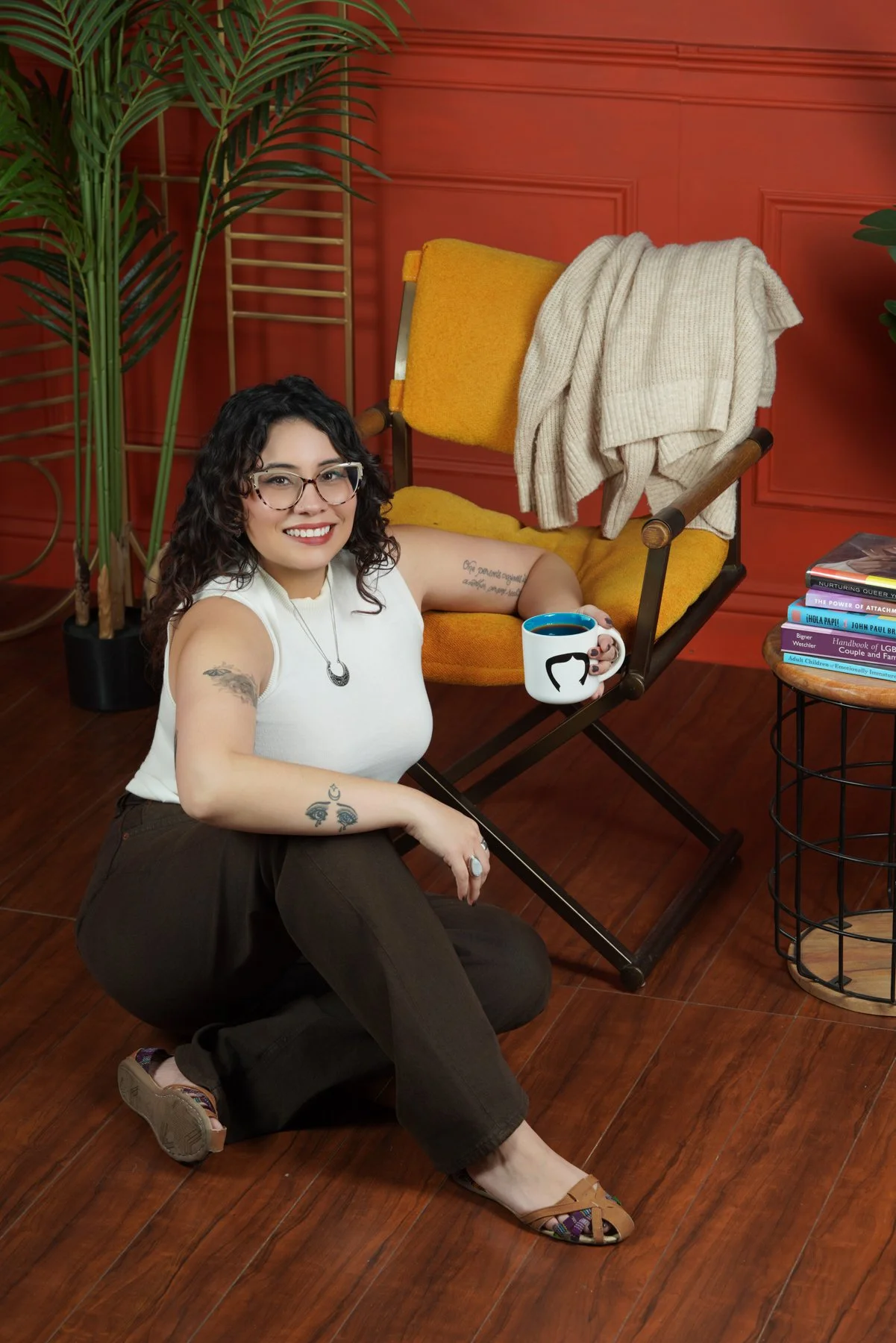
Ligia Orellana, LMFT (#122659)
I’m an anxiety therapist based in Torrance, California, certified in LGBTQ+ Affirmative Therapy and Somatic Attachment Therapy. I support first-generation BIPOC and Queer adults who feel the pressure to hold it all together in moving through people-pleasing and self-doubt, anxiety, relationship anxiety, and identity stress. My work creates space for deeper connection and self-trust through emotional safety and cultural understanding.
Learn about my work as a therapist in Torrance and through online therapy in California, or visit my About page.
