
Why Therapy Can Help When Life Feels Unpredictable
When Life Feels Unpredictable: You're Not Alone
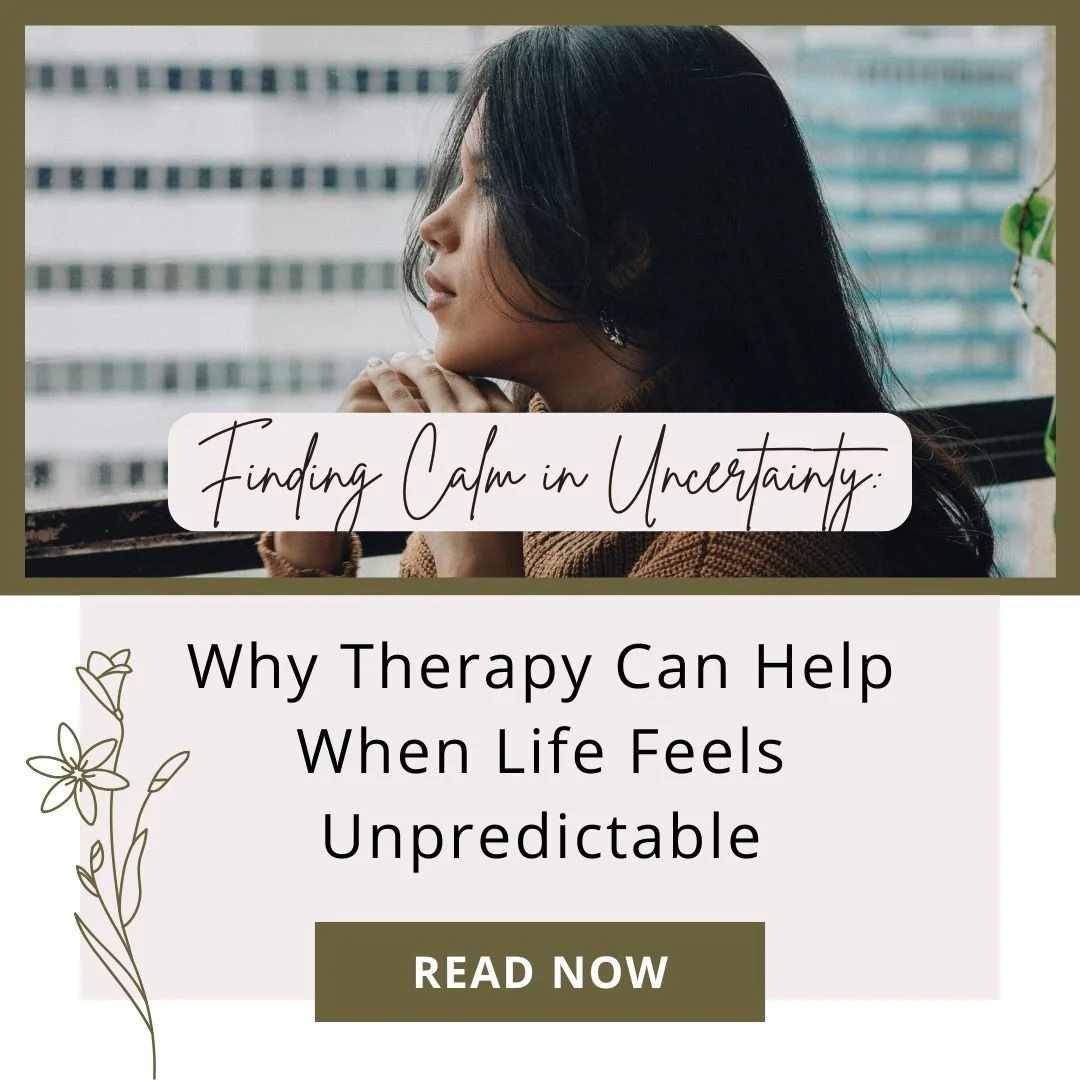
Feeling overwhelmed by uncertainty is more common than you think — and you do not have to navigate it alone.
Moments in our lives that involve change can feel so much bigger in the moment, even though in hindsight they can be small blips in our life. Being in my thirties, I can remember the big moments that made the ground feel unsteady — job changes, breakups, the pandemic, relationship shifts, the death of loved ones, career shifts. The smaller ones may not come to mind if someone were to ask me, but I can recall how the big ones felt to my core. Truly, I disliked them when they were happening.
I remember the internal groan, not having time to rest or the space to think about the change, much less ask myself what I needed. My automatic survival instinct took over my nervous system and body — problem solving, being productive, staying busy. There was no time for emotions or figuring out other ways to bring some calm, until I solved the problem at hand — making uncertainty feel like something I could handle.
In reality, this loop of treating life as a problem to solve left me exhausted without knowing the reason why. Many of the adults I work with are stuck in this same loop when life feels unpredictable.
I have asked myself this, and have clients reflect on it too: What if there was a better way to move through it?
How Uncertainty and Anxiety Are Connected
I invite you to take a moment to sit with the word uncertainty, or the unknown, and notice what comes up for you. Whether it is an instant knee-jerk reaction, shaking your head, a groan, an eye roll, or just a frozenness — a mind going blank. It is all welcome here.
These are your brain's natural responses to moments that carry that feeling, because uncertainty is associated with not being safe. It creates discomfort and communicates to our brain that we do not know what to expect next. And if you grew up in a childhood where many moments amounted to not having control over what transpired, it may have been interpreted as something bad is going to happen.

Your body's response to uncertainty is not weakness, it is biology.
This is where many First Gen BIPOC adults learn to take on the role of the responsible one, the problem solver, the strong one — because you created stability where there historically was not one, especially if your parents did not know how to create it. Consequently, we learned to find ways to do so in order to prevent "the bad thing" from happening. Because if we lost control, how could we truly know we were safe?
The hypervigilance, fight, flight, and frozenness do not come from nowhere. They show up as ways to protect us when our life feels unsteady. It is not weakness. It is survival. It is biology.
Reflection question: “When life feels unpredictable, what's your first instinct — push through, shut down, or reach out?"
What to Expect From Therapy for Anxiety
As a therapist in Torrance CA who works with anxiety, understanding what is happening internally for each client is fundamental to the work we do together — because movement cannot happen until we understand ourselves on a deeper level. That understanding creates room to be compassionate with ourselves, especially when we have spent years feeling like we are too much, that something is wrong with us, or that change is impossible.
We make room for those misconceptions, because they come from years of believing the only way to live was to lean on yourself. Maybe there are thoughts like "therapy is for serious problems," "I should be able to handle this myself," or "it takes years to see results." It is okay to have those. And I would be lying if I said I never had those moments throughout my own life.
Because I understand how hard it is to reach out for support — and the fears that come with the idea of living life differently — sessions always move at the pace the client is ready for. Emotional safety is built from trust, understanding, and openness, all of which are integrated into my practice and the therapeutic relationship I aim to create. I know it can feel hard to trust a stranger with what feels like the emotional depths of who you are, and that trust is something we cultivate together throughout the work.
Together, we move at a pace that allows you to reconnect with your own voice and build confidence in the choices you make moving forward. I integrate nervous system regulation and embodiment practices so that change is not just something you understand intellectually, but something you begin to feel in your body. You do not have to navigate this alone.
Reflection question: "What has held you back from trying therapy in the past?"
How a Therapist in Torrance CA Can Help You Regain Stability
A meaningful part of learning to cope with circumstances that feel out of control is recognizing that there is a way through — one that does not have to leave you feeling stuck or in survival mode day by day. That is what therapy with me looks like: an individualized approach catered to your nervous system, one that leaves you with more trust in yourself and more confidence in handling life's uncertainties.
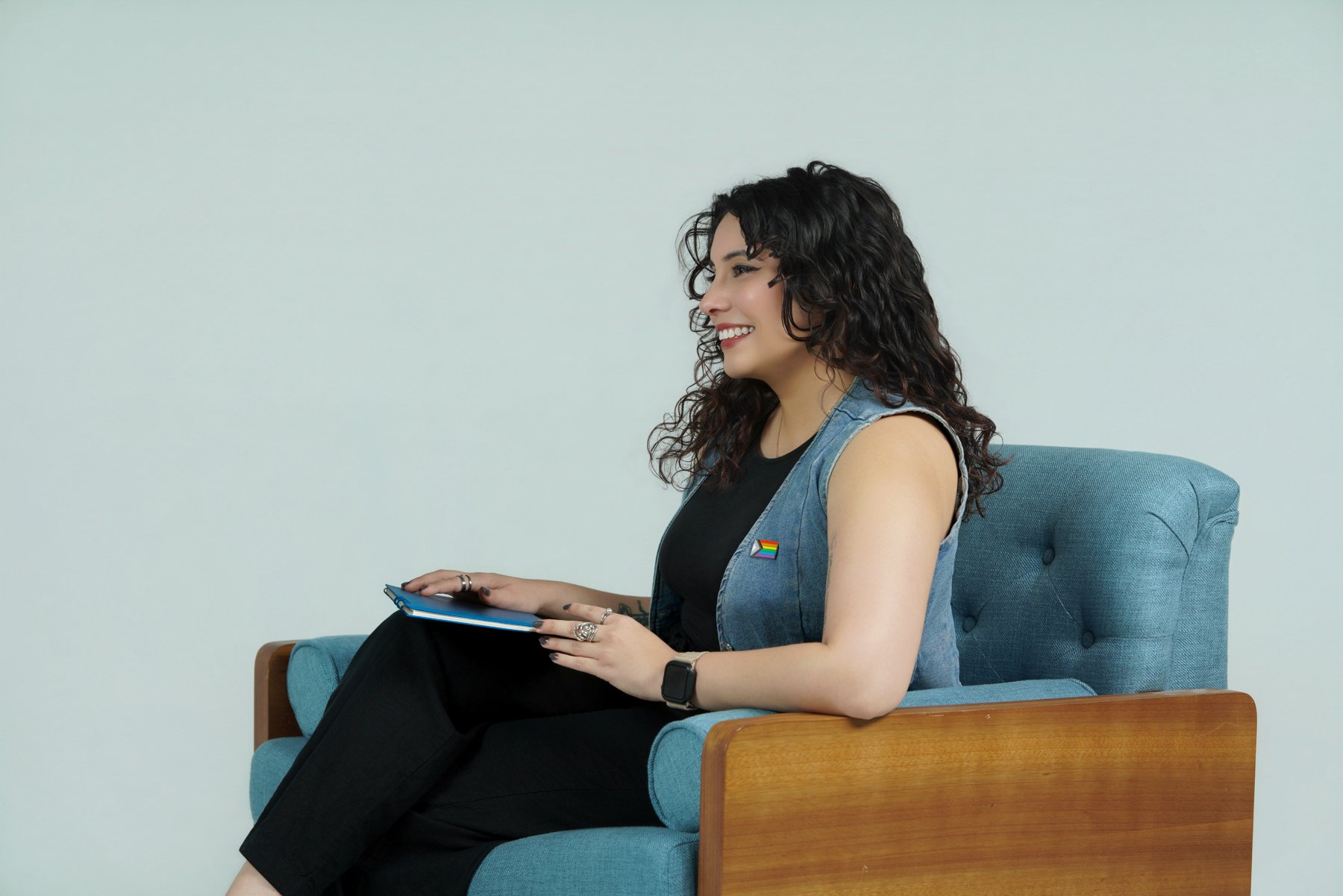
Therapy is an individualized space built around your nervous system and your life.
A space to process without judgment — Many adults carry the belief that they are a burden to the people in their life and struggle to find a way out of that thought loop. Through therapy, not only do you learn that it is okay to reach out for support, but also what it means to create that kind of space with loved ones — and to loosen the belief that leaning on others is a burden.
Tools tailored to you — Together, we work on creating strategies built around your life that are sustainable and meet your nervous system in small, meaningful ways to create long-lasting change. Many adults I work with who struggle with slowing down find that journal prompts used in between sessions help them practice a deeper level of self-awareness they are not yet used to.
Identifying patterns — Everyday situations involving change, shift, or the unknown are explored in a way that builds understanding around how you have protected yourself throughout childhood in ways that carried into adulthood — including what triggers anxiety or a shutdown.
Building sustainable habits for the long term — This is about reaching those goals by meeting your executive functioning and nervous system where they are, and building new pathways of safety through grounding practices that move you from discomfort toward comfort — not just surviving the current storm.
Reflection question: "Which of these benefits feels most relevant to what you're going through right now?"
You Don't Need to Hit Rock Bottom to Ask for Help
There is no "right" time to begin therapy. It does not have to be when the burnout hits, when the ache in your chest is there every day, or even when you are in crisis. Therapy is very much for personal growth — to prevent another emotional crash. Sometimes it begins from curiosity, a sense that something could feel different. Other times it begins from the desire to feel lighter, or to stop carrying everything alone.
There is a myth that healing happens in isolation. As a First Gen therapist, I can wholeheartedly say that you are not alone in navigating these struggles. Throughout my nine years in practice, I have worked with many people in Torrance and the greater Los Angeles area who are navigating these same feelings and second-guessing themselves when it comes to seeking support.

One session at a time, finding calm in uncertainty becomes possible.
As an anxiety therapist in Los Angeles, CA, I invite you to explore what it might feel like to treat your mind, body, and spirit in a new way — one that is not about pushing through, holding it together, or ignoring what is there.
Taking the First Step Toward Support
Anxiety can make change — including seeking therapy — feel risky, especially when safety has been built around staying the same.
When we pay attention to what keeps us from asking for support, we begin to welcome those feelings of uncertainty rather than avoid them. Whether this is your first time seeking support or you are returning after time away, meeting someone new can bring up that automatic need to protect yourself and be cautious. You are not alone in that.
A gentle way to explore whether therapy feels like the right step is by booking an initial consultation. Whether you are simply curious about what therapy is, or you are ready to move forward, it is a space to ask questions, get a sense of the connection, and see if it feels like a good fit. Finding the right therapist can feel overwhelming, and if we are not the right fit, we can explore options to help you connect with someone who is.
You do not have to have it all figured out before reaching out. Sometimes the first step is simply being open to what support can look like.
Reflection question: “What would it feel like to have support as you navigate what's uncertain right now?”
Start Finding Calm — One Session at a Time
As a therapist in Torrance, CA, I often work with adults who struggle in moments that feel uncertain and out of their control. They manage it the way they know best — by not paying attention to it, hoping the ache or tension goes away. But it does not, not entirely.
What I invite the adults I work with to consider is this: what if you became curious about the feeling of uncertainty, in order to explore why it feels so unsettling? Holding even a small sense of curiosity about wanting to understand yourself more is a meaningful place to begin. That curiosity is where self-understanding starts to grow — and where finding calm in uncertainty becomes possible.
I work with adults, especially First Generation, BIPOC, and Queer individuals, who often appear to be managing everything on the outside while carrying quiet pressure internally. Together, we move at a pace that allows you to reconnect with your own voice and build confidence in the choices you make moving forward.
If you are curious about how therapy can support you, I am now offering in-person sessions for anxiety therapy in Torrance, CA. For those outside of Torrance, I offer online therapy in California.
You do not have to figure it all out alone.
If you are curious about starting therapy, you can schedule a free consultation to see if working together feels like the right fit.
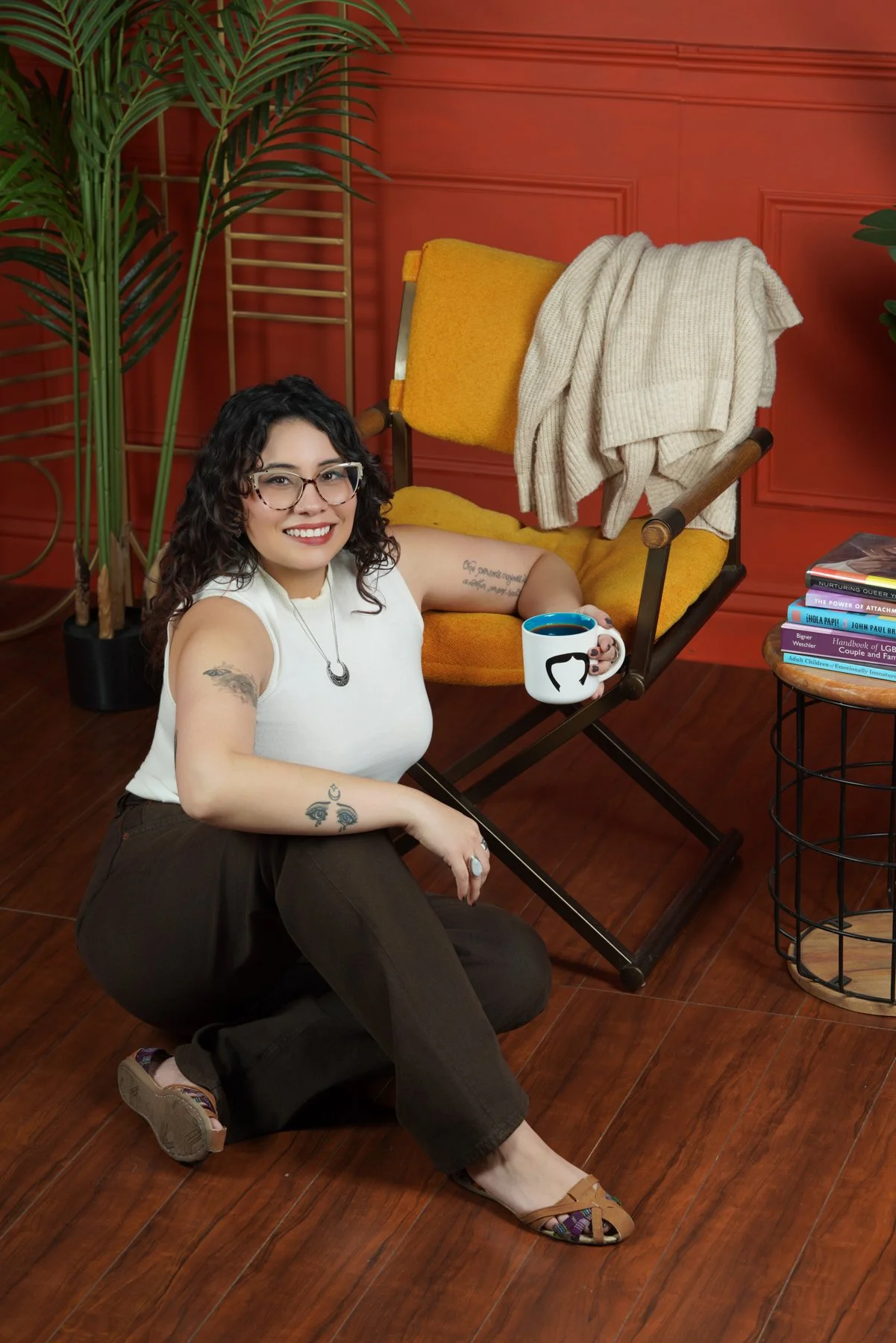
Ligia Orellana, LMFT (#122659)
I’m an anxiety therapist in Los Angeles, California, certified in LGBTQ+ Affirmative Therapy and Somatic Attachment Therapy. I support first-generation BIPOC and Queer adults who feel the pressure to hold it all together in moving through self-doubt, anxiety, and relationship stress. My work creates space for deeper connection and self-trust through emotional safety and cultural understanding.
Learn more about my work in Torrance or through online therapy, explore specialties like relationship stress and people-pleasing and self-doubt, or visit my About page.
