
5 Journaling Prompts to Understand Your Feelings of Uncertainty
Why Uncertainty Feels So Hard to Sit With
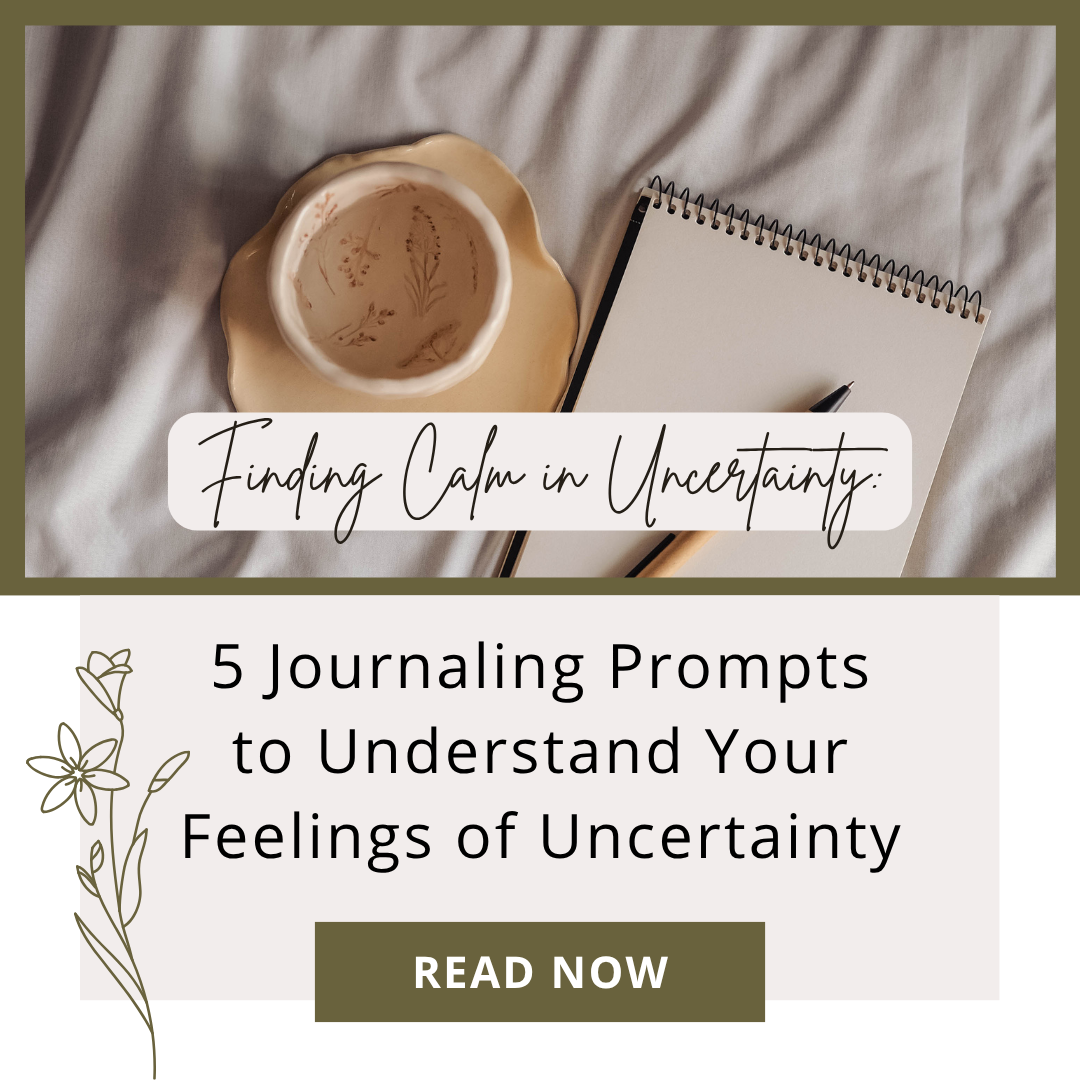
Journaling can help you slow down and better understand your emotional responses
Early on in our lives, we learn how to cope with “bad feelings” by observing what our parents, family members, and other adults around us do. These moments may have included being told how to handle something new, whether it was a feeling or a situation. Uncertainty is one of those experiences that shows up often in childhood, because so many things are new. When the adults around us have learned to push through difficult feelings, that way of coping can get passed down, becoming the only way we know how to respond to the unknown.
As we get older, uncertainty begins to show up in different ways.
Choosing a career path, being at a crossroads in life, or facing big decisions can bring up feelings of being lost or confused, especially when it feels like so much is riding on those choices. Underneath that is often pressure and expectation. From family, from society, and from environments where productivity is prioritized over slowing down.
Following a path that “makes sense,” feels logical, or seems secure is often highly praised. Because of this, decisions can come from a place of wanting to avoid making the wrong choice. Over time, this can start to feel overwhelming. But many people do not always label it as overwhelm. Instead, it shows up as a vague, uncomfortable feeling they want to get rid of.
What would it look like to do something different?
Instead of letting pressure and expectation drive your actions, what if you slowed things down and created space to understand what you are feeling?
What if, instead of trying to get rid of uncertainty, you began to get to know it?
That is where guided journaling can help. It offers a way to understand your emotions, notice patterns, and step away from the pressure of having to do it “right.”
How Journaling Helps You Make Sense of What You’re Feeling
Journaling with guided prompts can be a helpful tool, and it is something I integrate into my work with clients. It acts as a support between sessions, allowing them to continue building momentum around what we are focusing on in therapy. There is only so much we can hold in our memory between sessions, so journaling creates additional space to explore struggles, reactions, and growing awareness. It helps build the practice of slowing down. But it is not just about slowing down, you are also supported with prompts that guide you through the process, allowing you to move at your own pace and return to a more grounded state.
Because many of us grow up learning to move past our emotions, we can lose important information that our emotions and body are trying to communicate to us.

Creating small moments of calm can help you feel more steady when life feels unpredictable in Torrance, CA.
A big part of reconnecting with yourself is creating space between your automatic reactions and your awareness of what is happening. This is where you can begin to notice patterns, such as which emotions come up most often or what types of situations lead you to feel the need to protect yourself. The deeper work involves becoming more specific in how you understand your emotional responses, noticing the phrases, behaviors, or physical sensations that signal something feels off.
That awareness not only supports your relationship with yourself, but can also carry into your relationships with others, helping you begin conversations around boundaries.
As you can see, journaling can be a meaningful step toward creating change and building new habits. This is something I often guide clients through in anxiety therapy in Los Angeles, CA. The prompts shared below reflect the types of questions I explore in sessions with clients who are looking to regain a sense of steadiness and reduce the fear that can come when life feels unpredictable.
5 Journaling Prompts to Explore Your Experience of Uncertainty
A friendly reminder as you read the prompts below, this is an open invitation to complete them, but it is not necessary to do so as you move through this blog.
You may find yourself needing to return to them a couple of times before feeling ready to complete one or all five.
As I often advise my clients, I suggest starting with one question that you feel you can lean into with openness, and practicing it a couple of times throughout the week. As opposed to wanting to get it over with or finish quickly, that sense of urgency may actually be an indicator that your body is not quite ready to begin with those particular questions.
Pay attention to any feelings of urgency or pressure that may be coming up internally, and use that as a guide in choosing where to start.
It does not need to be done perfectly.

Taking time to notice what you are feeling is the first step toward change.
In many ways, the idea of doing it perfectly can become a barrier to being vulnerable with yourself.
When you think about the word uncertainty, what does it bring up for you?
Thinking about the meaning of words can help us slow down and reflect on our relationship with them, which can bring up our natural emotional responses. A helpful way to approach this question is by connecting it to a past or recent experience.
How have you seen others around you react to moments of the unknown, unpredictability, or uncertainty? What do you think about these reactions?
This helps you tap into how your surroundings have shaped your relationship with uncertainty, the unknown, and unpredictability.
In thinking about a situation connected to uncertainty, take a moment to reflect on how you responded.
Slowing down these interactions allows you to pay closer attention to your own responses. The previous question may also help you notice similarities or differences in how you react.
What was happening for you in that moment?
After looking externally, the next step is turning inward to understand how your body responds in real time. I often encourage clients to be as detailed as possible here, noticing sensations, emotions, thoughts, images, or even colors. This may take a few attempts, and that is okay.
How did you want to stop what was happening internally for you?
This question begins to tap more deeply into your automatic responses, what we might understand as your nervous system trying to protect you. It can start to open doors to patterns and reactions that may not have been fully explored before.
What You Might Start to Notice About Yourself
These prompts are meant to be gentle and small enough to integrate into your daily life. If this is your first time exploring whether what you are feeling is anxiety or something unfamiliar, you may begin to notice new information that your body has been holding onto for a long time.
That is the intention behind keeping these prompts small, rather than asking you to do a deep dive into your patterns right away.
It allows you to slowly step into noticing and acknowledging, for yourself, the ways your body has been trying to protect you.
For many, this has looked like surviving the constant pressure of what we experience in everyday life.
Some patterns you may begin to notice include how control and fear show up in your decision-making across different areas of your life. You may recognize avoidance, especially emotional avoidance, as a strategy that has helped you move through moments of discomfort. You might also begin to understand that the overthinking was never random, but your mind working overtime in an attempt to find relief by preparing for what could happen.
You may also start to connect physical experiences, such as nail biting, cuticle picking, tension in your shoulders, chest discomfort, or difficulty focusing, to the internal distress you have been carrying in response to uncertainty.
And maybe, just as important, you begin to recognize that you are not alone in this. What you have been feeling is more common than you may have realized, especially when it comes to emotional burnout and anxiety.
When Journaling Brings Up More Than Expected
It is important not to push yourself, and to allow space to pause as you move through these prompts. This is part of practicing gentleness with yourself. In moments where this begins to feel heavy, where you notice the urge to stop reading or shift your attention elsewhere, give yourself that.
It can feel frustrating not to push through discomfort, especially if you are used to finishing what you start. But sometimes, completing one prompt, or even just reading through this blog and returning to it later, is enough.
So if you notice something coming up for you, honor it. Acknowledge it. Let it know that you see it. And give yourself permission to take a break.
That in itself, slowing down and honoring your body and your capacity, is a new practice. And it is progress.
At times, this is also where having support can make a difference. Having someone to help you process what is coming up, and to guide you through it, can help it feel more manageable and less overwhelming.
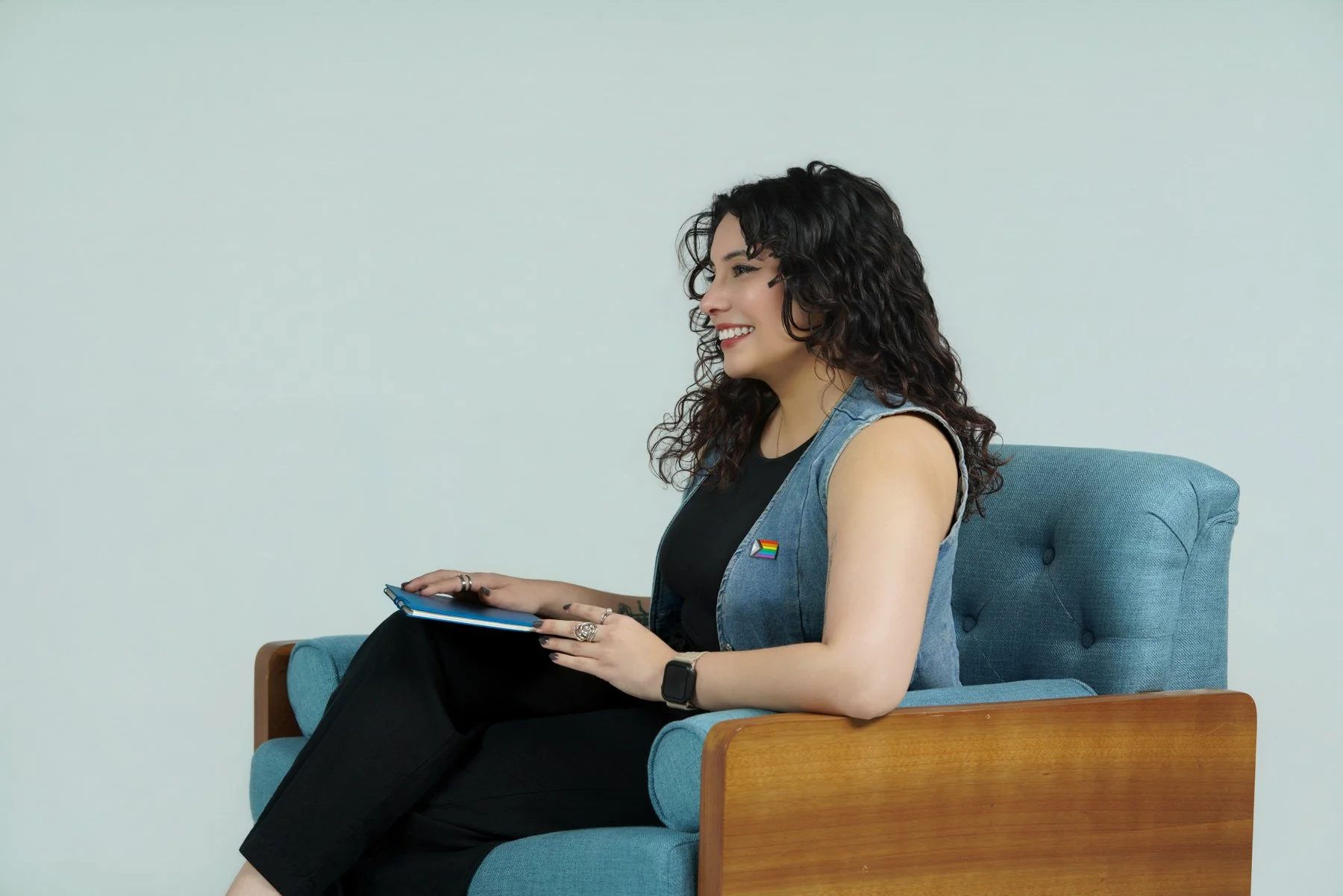
Providing a supportive space for adults navigating anxiety and uncertainty in Torrance, CA
You Don’t Have to Process This Alone
If you find yourself wanting support in understanding what is coming up for you, therapy can be a space to do that at your own pace.
As a therapist in Torrance CA, I work with adults who are navigating uncertainty, anxiety, and the pressure to have everything figured out, while feeling overwhelmed internally. Together, we focus on helping you build awareness, feel more grounded, and develop a sense of steadiness in moments that feel unpredictable.
I also offer anxiety therapy in Los Angeles for those who may not be local to Torrance, with virtual sessions available across California.
You do not have to make sense of everything on your own.
If you are curious about starting therapy, you can schedule a free consultation to see if working together feels like the right fit. And if it is not, I am always happy to help you find a provider who better meets your needs.
Call (323) 493-6644 or book a consultation here.

Ligia Orellana, LMFT (#122659)
I’m an anxiety therapist in Los Angeles, California, certified in LGBTQ+ Affirmative Therapy and Somatic Attachment Therapy. I support first-generation BIPOC and Queer adults who feel the pressure to hold it all together in moving through self-doubt, anxiety, and relationship stress. My work creates space for deeper connection and self-trust through emotional safety and cultural understanding.
Learn more about my work in Torrance or through online therapy, explore specialties like relationship stress and people-pleasing and self-doubt, or visit my About page.
