
Anxiety, Self-Trust, and the Fear of Making the “Wrong” Choice
“What If I Make The Wrong Choice?”
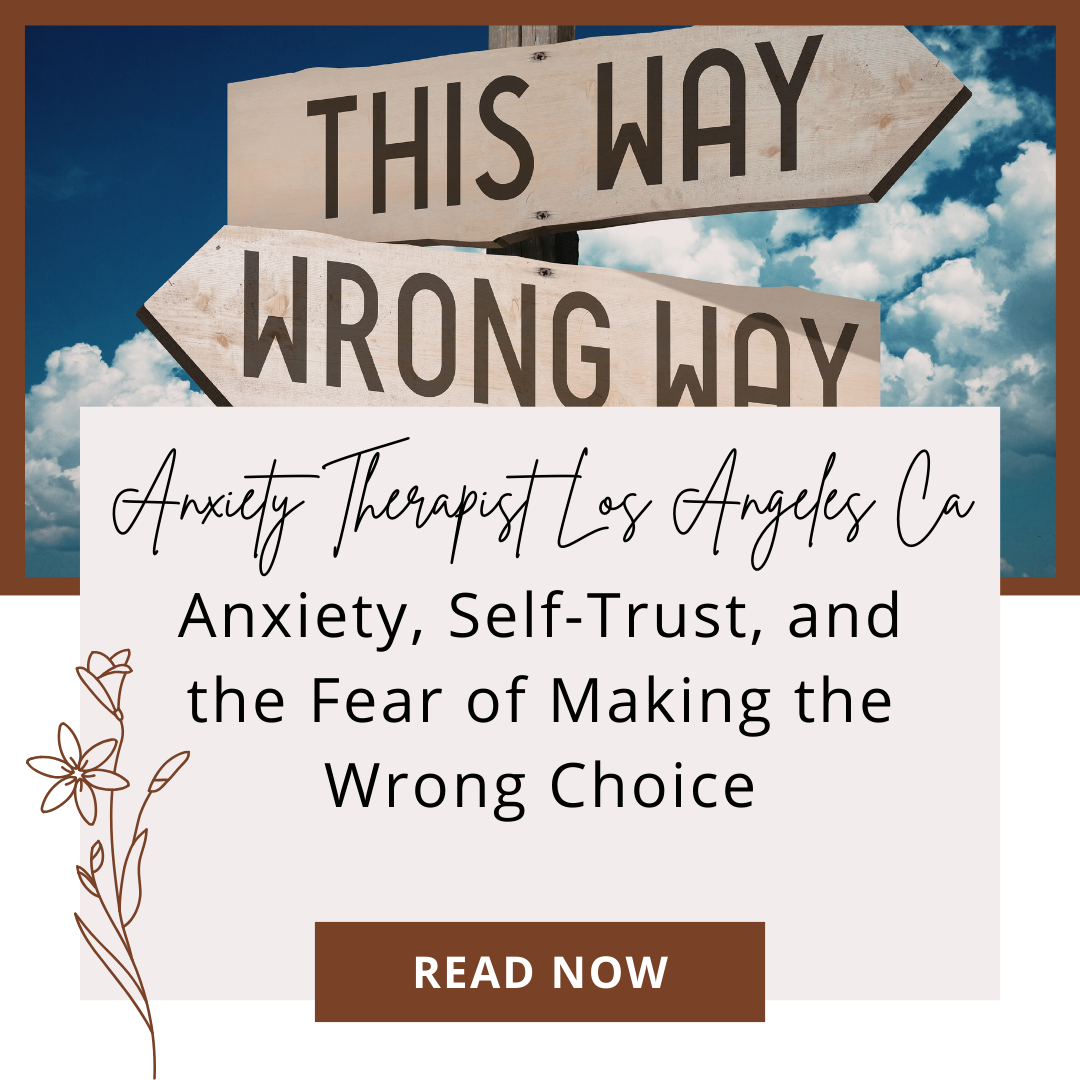
Learn how anxiety can make trusting your own decisions feel impossible with an anxiety therapist in Los Angeles, CA.
In a previous post, I wrote about how anxiety lives in the body and why emotional safety is necessary for real change. But there is another layer many adults notice: the quiet loss of trust in their own judgment.
It can show up as second-guessing yourself when faced with an important decision. Instant thoughts of guilt appear. Worries about what others might think begin to take over. It becomes harder to slow down and name what you actually want because your choices have long been shaped by pressure and expectations.
Sometimes it feels easier to make the decision that avoids assumed disappointment or criticism from others. It feels safer.
But it can also leave you wondering: “Have I sacrificed choices I may have wanted?”
That is where some decisions stay with us longer than expected, lingering in the background. The questioning begins. Did I make the right choice? Anxiety moves in with second-guessing, especially when self-trust feels difficult to rely on.
As an anxiety therapist in Los Angeles, CA, I see this pattern often with adults who want to build a deeper relationship with themselves. Over time, healing begins when people learn they can trust themselves again.
You are not alone in this experience. Many adults who appear capable and steady on the outside feel an inner tension when decisions arise. It connects to the stuckness we explored in earlier posts in how feeling unsafe with uncertainty can shape the way we move through life.
We may understand our anxiety intellectually, yet still feel unsure how to move forward. When self-trust has been shaped by pressure, expectations, or fear of disappointing others, insight alone does not always make decisions easier.
Why Anxiety Makes Decision-Making Feel Risky
Anxiety can sometimes help us make decisions that protect our well-being. There are moments when it correctly interprets a situation as high risk and signals that something may need our attention. But in other moments, anxiety can overestimate the threat, especially when uncertainty is involved.
This often happens when decisions have historically been tied to high expectations, unspoken pressure, cultural sacrifice, or environments where success determined belonging. When those experiences shape us, making the wrong choice can feel internally risky, almost as if something important is at stake.
And in some ways, it is. A decision can feel tied to the potential loss of belonging, understanding, or safety.

In Anxiety Therapy Los Angeles, CA, adults describe the difficulty to quiet their thoughts enough to move past the stuckness of what keeps us from making a decision.
We see this show up in relationships, careers, and social choices. Moments where we feel halted even when part of us wants to move toward uncertainty. It becomes difficult to quiet our thoughts enough to move past the stuckness.
Maybe it is a relationship where something feels off in your needs being met, but the fear of what others may think keeps you there. Or a friend who repeatedly cancels plans, yet it feels hard to bring it up because you worry about being misunderstood. Or the promotion you have been wanting, but the fear of not liking it stops you from applying.
These decisions can feel especially difficult to move through because anxiety carries the weight of imagining everything that could go wrong.
Overthinking, avoidance, and procrastination can begin to take over as ways to delay a decision that, deep down, may reflect something you truly want.
Understanding the Internal Conflict
The process of making a decision can feel like a long journey in our minds. Different pathways appear, and we mentally walk through each one to see which feels safest or less risky to take. At times, every path can feel tied to perceived expectations about what will happen if we choose one over the other.
And somewhere along the way, the last thing we consider is our own internal desires.
Growing up, you may have learned to follow unspoken rules within your family, culture, or society. At the time, those expectations may not have been obvious, but they can quietly shape the way decisions are made later in adulthood. Over time, it can become harder to notice which desires are truly your own and which ones developed from the expectations of others.
Fear of judgment or criticism can become a powerful driver in how we make decisions as adults.
Getting closer to your internal desires often means slowly rebuilding self-trust. Learning to lean on yourself in both the good and the difficult moments. In the decisions that work out, and in the ones that do not.
Trusting that you can hold yourself through either outcome.
Common Signs of Decision Anxiety I See as an Anxiety Therapist in Los Angeles, CA

Signs of decision making anxiety in therapy for anxiety in Los Angeles, CA, show up as overthinking multiple scenarios, seeking reassurance repeatedly, and difficulty committing to a choice.
Beginning to notice when decision anxiety surfaces can help you acknowledge when it is happening and gain a better understanding of why it shows up. Through this practice, you begin to see how anxiety may be trying to protect you and your internal desires.
Some behaviors to look for include:
Overthinking multiple scenarios
Seeking reassurance repeatedly
Difficulty committing to a choice even when you logically feel ready
For those who experience a quieter form of anxiety, it can also show up through the body. You might notice tension building, restlessness, or other signals of stress when you are faced with making a decision.
The goal is not to immediately fix the anxiety, but to begin recognizing when it appears. This can be a simple practice you check in with once or twice a week, slowly building awareness over time.
As you begin noticing these patterns, you may realize that the difficulty in making decisions is not just about choosing between options. It is also about learning to feel safe with uncertainty and trusting that you can handle what comes next.
That is often where deeper work begins.
How Therapy for Anxiety Helps You Rebuild Self-Trust
This is where therapy for anxiety can be helpful. It can make the path toward rebuilding self-trust feel less overwhelming by focusing on small steps that help you build safety with uncertainty.
The work often takes a nervous-system approach, meeting your anxiety with curiosity rather than pushing it away. Together, we begin to understand what keeps you feeling stuck and what helps your body find enough safety to move toward change. Instead of being stalled by fears around decision-making, overthinking, constant reassurance seeking, or difficulty committing to choices, we begin to slow those patterns down and understand them.
Part of this work is also learning to notice the body tension that often goes overlooked. Therapy becomes a space to sit with reactions without judgment and with more compassion for yourself.
In anxiety therapy in Los Angeles, CA, the space we create together becomes one where small choices can be explored safely. Many clients begin with everyday decisions—how they structure their schedules, routines, and boundaries—to notice where it feels difficult to create balance.
These smaller choices become opportunities to practice using your voice, your pacing, and your consent. The process is collaborative and moves at a pace that feels manageable for you. Over time, this becomes a practice ground for rebuilding trust in yourself.
As that trust grows, many people find it feels safer to begin approaching larger decisions slowly, guided by what their body is ready for.
Steps to Begin Trusting Your Decisions
If you are curious what some of the practices I bring into therapy look like, or what clients may try in between sessions, they often center around slowing down their responses and becoming more curious about them.
For some people, pausing and noticing comes naturally. For others who learned to cope through avoidance because emotions never felt safe, this process may need a slower and more gentle approach when recognizing their body’s signals.
Therapy is never a one-size-fits-all process, which is important to keep in mind as you move through the practices below.
Pause and notice bodily signals when a decision feels hard
This can be as simple as noticing where tension appears in your body. It may show up in the chest, head, shoulders, or stomach. Everyone’s signals can look a little different.
Reflect on past experiences without judgment
Journaling can be helpful when done with structure. You might break down a past situation where making a decision felt difficult and become curious about what thoughts or emotions appeared in that moment. Later, you can reflect on how the decision felt afterwards.
Small, low-stakes experiments to practice choice-making
Daily choices that carry little consequence can still feel difficult when you are used to prioritizing others. Practicing with small decisions can slowly help build comfort with trusting yourself.
Leaning on supportive people while noticing your own voice
Support from others can be helpful, but it can also be useful to notice when reassurance begins to replace your own internal desires. Part of the work is learning to hear your voice alongside the support you receive.
Reassurance for High-Pressure Lives From an Anxiety Therapist in Los Angeles, CA
For many adults who are used to carrying pressure quietly, the hardest part is not understanding what is happening. It is allowing yourself to slow down enough to listen to what you need without feeling like you are disappointing someone, falling behind, or making the wrong choice.
If you recognize yourself in this pattern, it does not mean you lack motivation, discipline, or clarity. It often means you have spent many years learning how to keep things together for yourself and others. Those strengths helped you move forward in life, but they can also make it harder to pause and ask what you truly want.
Therapy can become a place where you begin practicing that pause. A place where decisions are not rushed, and where rebuilding trust in yourself happens gradually and with support.
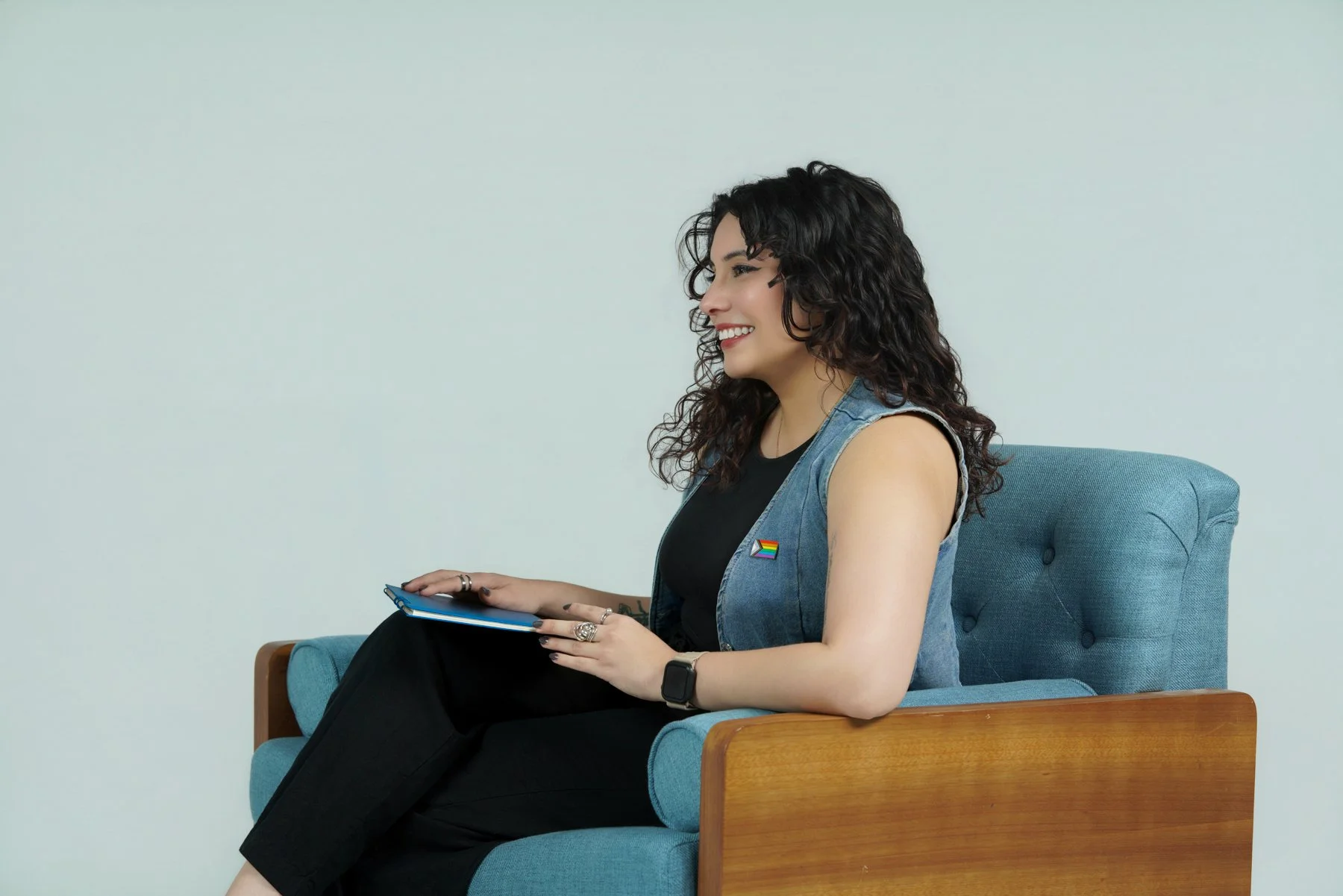
As an anxiety therapist in Los Angeles, CA, I work with clients who have been carrying pressure quietly and are looking to find relief — in a space that moves at your pace.
As an anxiety therapist in Los Angeles, CA, I work with adults—especially first-generation, BIPOC, and Queer individuals—who often look like they are managing everything on the outside while carrying quiet pressure internally. Together, we work at a pace that helps you reconnect with your own voice and build confidence in the choices you make moving forward.
You do not have to figure it all out alone.
If you are curious about starting therapy, you can schedule a free consultation to see if working together feels like the right fit.
Call (323) 493-6644 or book a consultation here.

Ligia Orellana, LMFT (#122659)
I’m an anxiety therapist in Los Angeles, California, certified in LGBTQ+ Affirmative Therapy and Somatic Attachment Therapy. I help first-generation BIPOC and Queer adults who feel the pressure to hold it all together move through self-doubt, anxiety, and relationship struggles. My work creates space for deeper connection and self-trust through emotional safety and cultural understanding.
Learn more about my work with relationship stress, people-pleasing and self-doubt, and online therapy, or visit my About page to learn more.
